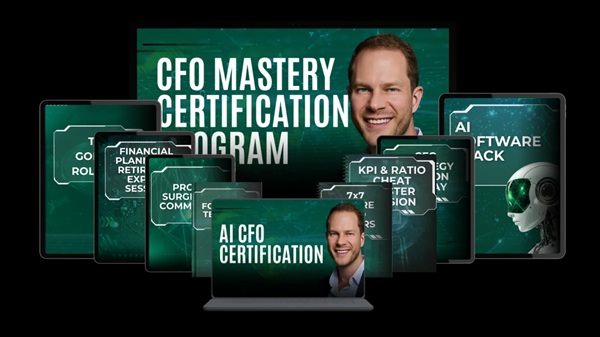
[GroupBuy] CFO Mastery – Charles Leikauf
$2,997.00 $35.00
- Delivery: You Will Receive A Receipt With Download Link Through Email.
- If you need more proof ofcourse, feel free to chat with me!

Description
In today’s rapidly evolving financial landscape, CFO Mastery is no longer just about traditional accounting and compliance; it’s about embracing cutting-edge artificial intelligence to drive strategic growth and offer unparalleled advisory services.
CFO Mastery

The journey to CFO Mastery in the age of artificial intelligence is fundamentally about reinventing the finance professional’s identity. It necessitates a pivot from transactional tasks to transformational leadership, cultivating a skillset that transcends mere number-crunching to encompass strategic insight, technological fluency, and exceptional communication. This comprehensive shift is meticulously structured through several integrated program components, designed to elevate practitioners from basic service providers to indispensable strategic advisors who command significant value. The essence of this transformation lies in empowering finance professionals to not just interpret data, but to proactively shape business outcomes, leveraging AI to enhance every facet of financial strategy and operational efficiency. It means moving beyond historical reporting to predictive analytics, beyond statutory compliance to value-added consultation, effectively making the role of the CFO a central pillar of organizational innovation and competitive advantage.
Redefining the CFO’s Strategic Role
The traditional role of a finance professional has largely revolved around historical reporting, compliance, and reactive problem-solving. However, the AI CFO Certification ushers in a new era, pushing participants to transcend this well-trodden path and embrace a proactive, strategic identity. This foundational shift is not merely an upgrade of existing skills but a complete overhaul of professional purpose. It emphasizes a mindset where the finance leader is an architect of future success, a driver of profitability, and a core member of the executive decision-making team, moving definitively away from being a mere “compliance vendor” to becoming a truly strategic partner. The program instills the belief that true CFO Mastery lies in foresight, innovative problem-solving, and the ability to articulate complex financial narratives into actionable business strategies that resonate across all levels of an organization.
At the core of this redefinition is the mastery of a comprehensive CFO curriculum, which extends far beyond conventional accounting principles. This curriculum is meticulously designed to immerse participants in advanced financial analysis, risk management, capital allocation, and strategic planning—all infused with an AI-centric approach. Gone are the days when spreadsheet proficiency alone sufficed; modern CFO Mastery demands an understanding of how AI tools can automate routine analysis, identify nuanced patterns in vast datasets, and project future scenarios with unprecedented accuracy. This deep dive into a modernized curriculum ensures that graduates possess not only the theoretical knowledge but also the practical frameworks necessary to navigate complex financial landscapes, make informed decisions, and proactively advise businesses on paths to sustainable growth and increased enterprise value. The emphasis is on building a robust analytical toolkit that is both cutting-edge and immediately applicable.
A critical aspect of transitioning to this elevated strategic role involves the installation of real-world delivery frameworks and intensive training in profit-focused communication. It’s not enough to possess superior analytical skills; a strategic CFO must be adept at translating intricate financial data into clear, compelling narratives that drive executive conversations and secure buy-in for critical initiatives. These frameworks provide structured methodologies for delivering strategic insights, developing robust financial models, and presenting findings in a manner that is both understandable and persuasive to non-finance executives. The communication training hones the ability to articulate value, justify investments, and pivot discussions towards profit maximization, ensuring that every interaction is geared towards tangible business outcomes. This fusion of analytical rigor and communication prowess is what ultimately distinguishes a tactical accountant from a truly strategic, influential CFO, equipping them to effectively lead and shape the financial trajectory of any organization they serve.
Crafting High-Value Advisory Services
The shift from transactional services to high-value advisory is a cornerstone of CFO Mastery in the AI era, requiring a fundamental reimagining of what financial support entails. It moves beyond merely reporting on past performance to actively shaping future outcomes through insightful analysis and strategic counsel. The AI CFO Certification places significant emphasis on the implementation of strategic reporting frameworks, which are designed to transform raw financial data into actionable intelligence. These frameworks move beyond standard profit and loss statements or balance sheets, integrating advanced analytics, predictive models, and scenario planning to offer a panoramic view of a business’s health and potential trajectories. The goal is to equip finance professionals with the ability to construct reports that not only inform but also provoke strategic discussions, highlight untapped opportunities, and mitigate emerging risks, positioning them as essential guides in their clients’ strategic journeys.
At the heart of crafting these elevated advisory services is the mastery of advanced financial analysis using artificial intelligence. AI is not merely a supplementary tool; it is an intrinsic component that magnifies the depth and speed of financial scrutiny. By leveraging AI-powered algorithms, professionals can rapidly sift through voluminous data sets to uncover intricate correlations, identify anomalies, and forecast trends with a precision that manual methods simply cannot match. This capability allows for a proactive approach to financial health, enabling advisors to pinpoint areas of inefficiency, suggest optimal resource allocation, and model the financial impact of various strategic decisions before they are implemented. The integration of AI liberates advisors from the tedium of data aggregation and reconciliation, allowing them to dedicate more cognitive resources to interpreting insights, generating strategic recommendations, and engaging in deeper, more meaningful principal-level discussions with their clients.
The culmination of these skills is the ability to offer advisory services that are not just reactive or compliance-driven, but proactively strategic and deeply impactful. Graduates are trained to provide executive-level financial analysis that moves beyond traditional reporting to offer foresight, competitive intelligence, and nuanced interpretations of market dynamics. This shift transforms the finance professional from a background operator into a front-line strategist, capable of influencing critical business decisions and driving superior performance. Personal analysis reveals that businesses are increasingly seeking partners who can not only manage their books but also help them navigate complex economic shifts, optimize their operations, and identify new avenues for growth. The program empowers its participants to meet this demand head-on, delivering a superior quality of advice that translates directly into enhanced revenue, improved profitability, and sustainable competitive advantage for their clients, solidifying their position as invaluable strategic assets.
Architecting Predictable, Premium Revenue
Transitioning to a strategic, AI-enhanced fractional CFO role is not solely about intellectual transformation; it is equally about financial empowerment through the CFO Offer & Monetization Framework. This blueprint is meticulously designed to guide professionals in structuring their advisory practices to secure premium, recurring revenue, moving them away from the precariousness of hourly billing or project-based fees. It acknowledges that true value is reflected not just in the expertise delivered, but also in the sustainable and predictable financial model supporting that expertise. This framework instills a commercial acumen alongside financial analysis, teaching participants that their newfound CFO Mastery capabilities are a premium asset demanding commensurate compensation, thereby fostering genuine financial independence and enterprise growth for the advisor themselves.
A critical component of this framework is the development of a sophisticated Pricing Strategy, focused on creating retainers that genuinely reflect the advisor’s real value. This involves moving beyond a cost-plus mentality to a value-based pricing model, where fees are directly tied to the strategic outcomes and enhanced profitability clients achieve through the advisor’s guidance. Professionals learn to articulate the tangible return on investment they provide, positioning their services not as an expense but as a vital, high-yield investment. The program provides methodologies for calculating the economic impact of their advice, enabling them to justify monthly retainers between $3,000 and $5,000. This approach requires not only confidence in one’s capabilities but also a deep understanding of the client’s business, allowing the advisor to frame their contribution in terms of measurable improvements to the client’s bottom line and strategic position.
Furthermore, the program offers a robust Retainer Architecture, detailing how to structure recurring revenue models based on proven 7-figure frameworks. This involves creating tiered service packages, clearly defining deliverables, and establishing long-term engagements that foster deep, ongoing client relationships. The emphasis is on building predictable revenue streams that provide financial stability for the advisor’s practice, allowing them to invest in their own growth and provide even greater value to clients. This predictability isn’t just about personal income; it allows the fractional CFO to dedicate consistent strategic oversight to their clients, rather than constantly seeking new projects. The culmination is Income Acceleration, moving beyond theoretical earnings to achieving predictable, high-value monthly income. This means equipping participants with conversion strategies, client retention techniques, and a clear roadmap for scaling their advisory business, ensuring that their enhanced CFO Mastery translates directly into a thriving, financially rewarding professional practice.
| Core Pillar | Description | Key Outcome for Professionals |
|---|---|---|
| Advanced Financial Analysis using AI | Leveraging artificial intelligence for deeper, faster, and more accurate financial insights. | Transform from data aggregators to insightful strategic analysts. |
| Implementation of Strategic Reporting Frameworks | Establishing robust systems for generating actionable reports that drive executive decisions. | Deliver high-value, forward-looking strategic intelligence. |
| Monetization of High-Value Advisory Services | Developing pricing strategies and recurring revenue models for premium advisory offerings. | Command monthly retainers of $3,000-$5,000, ensuring predictable income. |
Charles Leikauf
At the heart of this transformative program lies the visionary leadership of Charles Leikauf, who has meticulously designed the AI CFO Certification to equip finance professionals with the tools and mindset required to thrive in a dynamically changing market. His approach is not merely about adapting to AI but about leveraging it as a competitive differentiator, fundamentally reshaping the advisory landscape. Charles Leikauf recognized early on that the traditional paradigms of finance were unsustainable in an era of rapid technological advancement and increasing demand for strategic foresight. He conceived a program that would not just patch existing skill gaps but forge an entirely new professional identity, embedding advanced AI capabilities as a core rather than a peripheral aspect of CFO Mastery. His foresight underscores a deep understanding of both market needs and technological potential, setting a new standard for professional development in finance.
Visionary Leadership: The Architect of AI CFO
Charles Leikauf is more than just the designer of the AI CFO Certification; he is the architect of a new paradigm for finance professionals, driven by a profound understanding of evolving market dynamics. His vision is centered on transitioning finance professionals from their often-traditional service roles, which can be perceived as commoditized, into strategic, AI-enhanced fractional CFOs. This isn’t merely an incremental improvement; it’s a revolutionary shift designed to empower individuals to deliver executive-level financial analysis and command premium, recurring revenue for their invaluable strategic counsel. Leikauf’s insight recognized that the future of finance lies not in resisting automation but in embracing it to elevate human strategic capabilities, ensuring that financial professionals remain indispensable in an increasingly automated world. His strategic foresight has enabled the creation of a program that is uniquely positioned to address the challenges and opportunities of the 21st-century business environment, equipping participants for unparalleled CFO Mastery.
A core philosophical cornerstone of Charles Leikauf‘s program design is the principle that “Rather than competing with AI, participants are taught to lead with it.” This ethos represents a profound departure from the fear-driven narrative often surrounding AI’s impact on employment. Leikauf reframes AI not as a threat to job security but as a powerful co-pilot and accelerator for human intelligence and strategic decision-making. By integrating AI-powered toolsets like AI Charles directly into the curriculum, he ensures that finance professionals learn to harness AI’s analytical prowess, automation capabilities, and predictive power to enhance their strategic output, rather than being sidelined by it. This positive and proactive stance on AI integration instills confidence and equips graduates with a competitive edge, transforming them into pioneers who can leverage technology for advanced CFO Mastery instead of being reactive bystanders.
The implications of Charles Leikauf‘s innovative program design are far-reaching, signaling a definitive shift from finance professionals being seen as “compliance vendors” to becoming “modern, tech-enabled strategic advisors.” This transformation directly addresses the market’s growing demand for strategic partners who can offer more than just historical reporting. By focusing on high-leverage, profit-focused strategic leadership, the certification empowers graduates to offer proactive, insight-driven advice that directly contributes to a client’s growth and profitability. This strategic shift not only elevates the professional standing of graduates but also enables them to command significantly higher fees, reflected in the program’s guidance towards securing monthly retainers between $3,000 and $5,000. Under Leikauf’s guidance, the AI CFO Certification is actively shaping the future of finance, producing a new generation of leaders capable of inspiring confidence and achieving profound financial impact.
Unleashing AI Charles: Practical Integration
Central to the innovative curriculum spearheaded by Charles Leikauf is the direct and impactful integration of “AI Charles,” a proprietary toolset designed to provide participants with a decisive competitive advantage in a rapidly changing market. This isn’t theoretical AI; it’s a practical, hands-on application that embeds artificial intelligence into the daily workflow of a modern fractional CFO. The purpose of AI Charles extends beyond mere automation; it’s about providing superior analytical horsepower and operational efficiency that allows finance professionals to perform at a higher strategic level. By making advanced AI accessible and user-friendly, the program dismantles traditional barriers to AI adoption, enabling immediate and tangible benefits for those pursuing CFO Mastery in a tech-driven landscape. This practical integration ensures that graduates don’t just understand AI, but actively wield it as a strategic leverage point in their advisory practices.
One of the most immediate and impactful practical applications of AI Charles is the deployment of built-in workflows and strategic prompts, alongside the utilization of faster reporting systems. These pre-configured workflows guide professionals through complex analytical processes, ensuring consistency, accuracy, and speed in financial analysis. Strategic prompts, on the other hand, act as intelligent assistants, helping users formulate insightful questions, interpret data more deeply, and identify critical patterns that might otherwise be missed. The faster reporting systems, powered by AI’s ability to process and synthesize vast amounts of data in mere moments, drastically reduce the time spent on generating financial statements and analytical reports. This efficiency liberates the CFO from labor-intensive data crunching, allowing them to dedicate more time to value-added activities such such as strategic interpretation, client consultation, and proactive planning, directly enhancing their capacity for CFO Mastery.
Beyond mere reporting, the program emphasizes the implementation of AI-assisted forecasting tools, specifically designed to increase insight while minimizing manual effort. Traditional forecasting can be a laborious, time-consuming process prone to human bias and limited by the volume of data that can be manually processed. AI Charles, conversely, can analyze historical trends, identify intricate correlations across multiple data points, and generate highly accurate predictive models with unparalleled speed. This capability allows fractional CFOs to provide clients with sophisticated scenario planning, risk assessments, and growth projections that are data-driven and dynamic. The significant reduction in manual effort means that advisors can focus on interpreting the forecasts, stress-testing assumptions, and developing actionable strategies based on these intelligent predictions. This empowers graduates to consistently deliver proactive, forward-looking insights, positioning them as essential guides in their clients’ strategic decision-making, and solidifying their CFO Mastery through technological leverage.
Strategic Execution: Bridging Theory to Practice
The AI CFO Certification, under Charles Leikauf‘s expert guidance, understands that theoretical knowledge, however comprehensive, only truly transforms into CFO Mastery through practical application and hands-on execution. This understanding underpins the crucial role of Weekly Executive Implementation Sessions. These live, interactive sessions are the bridge between learning advanced concepts and actually applying them in real-world scenarios, ensuring that participants don’t just absorb information but actively build the skills and systems necessary for their new professional identity. The emphasis on “active execution” ensures that the learning process is dynamic, experiential, and directly contributes to the participant’s readiness to serve as a high-value, AI-enhanced fractional CFO from day one. These sessions are designed to foster an environment of practical problem-solving and skill consolidation, making the transition from student to practitioner seamless and confident.
During these intensive sessions, participants engage in crucial activities such as financial model construction and the refinement of service offers. Financial model construction goes beyond basic spreadsheet exercises; it involves using advanced AI tools and frameworks to build detailed, dynamic financial models that can forecast performance, analyze various strategic initiatives, and support robust decision-making for real-world businesses. This hands-on process solidifies their analytical capabilities and demonstrates how AI can enhance the accuracy and speed of model development. Concurrently, the refinement of service offers is a critical entrepreneurial exercise. Participants learn to clearly define their value proposition, package their services into compelling retainer structures, and articulate how their AI-enhanced CFO Mastery directly addresses client pain points and delivers measurable ROI. This practical refinement ensures that they are ready to market and monetize their expertise effectively upon graduation.
Further enhancing the practical utility of the program, the Weekly Executive Implementation Sessions delve into the analysis of real-world client case studies and the collaborative building of working systems. Through dissectingthrough dissecting actual business challenges, participants gain first-hand experience in applying AI-driven financial strategies in complex, nuanced contexts. Each case study is carefully chosen to expose students to a range of scenarios, from scaling startups to restructuring mid-market enterprises, highlighting the diversity of problems a modern fractional CFO encounters. By working collaboratively, participants develop not only technical proficiency but also the soft skills essential to effective client interaction, such as clear communication, persuasive presentation, and strategic negotiation. This approach ensures that the transition from theory to practice is holistic, allowing graduates to confidently deliver actionable insights that clients can implement immediately, reinforcing their CFO Mastery.
The iterative feedback process during these sessions is equally critical. Charles Leikauf emphasizes a model of continuous improvement where each exercise is followed by structured critique and guided reflection. Participants receive targeted feedback on their analytical methods, AI application, and client interaction strategies, helping them to identify gaps, correct missteps, and refine their approach in real time. This reflective practice instills a mindset of precision, adaptability, and high performance—qualities that define elite CFO professionals. Moreover, the collaborative environment fosters peer learning, where participants gain exposure to diverse problem-solving approaches, expand their strategic repertoire, and cultivate a network of high-caliber finance professionals, all of which enhance their ability to execute at the highest level.
Finally, the program ensures that graduates emerge not only as proficient users of AI but as innovators who can leverage technology to create competitive advantage for clients. The focus is on embedding a strategic mindset that prioritizes value creation over rote execution, encouraging graduates to proactively anticipate challenges, model scenarios, and offer solutions that maximize profitability and efficiency. Through this hands-on, highly interactive training, students internalize the principles of CFO Mastery: strategic insight, technical excellence, and client-focused execution. By the time they complete the AI CFO Certification, participants are fully equipped to navigate complex financial landscapes, implement AI-enhanced strategies seamlessly, and command their role as indispensable advisors—making Charles Leikauf‘s vision of the modern, AI-empowered CFO a practical reality.
CFO Mastery
CFO Mastery represents more than a title; it embodies a comprehensive capability in strategic financial leadership, operational acumen, and transformative business insight. In today’s dynamic business environment, the role of a Chief Financial Officer has expanded far beyond traditional accounting and reporting functions. Modern CFOs are expected to influence strategy, optimize performance, and act as trusted advisors to both executive teams and stakeholders. Under Charles Leikauf’s framework, CFO Mastery is cultivated through a blend of advanced analytical skills, practical experience, and the effective integration of technology to elevate decision-making. This paradigm is particularly relevant for professionals aiming to transition into high-value fractional CFO roles, where expertise must be demonstrated not only through knowledge but through actionable outcomes that drive client growth and profitability.
The concept of mastery, in this context, entails a holistic understanding of financial operations while simultaneously developing the capacity to think strategically. Graduates trained under Charles Leikauf’s methodologies learn to anticipate financial trends, assess risks with precision, and provide insights that go beyond the numbers. They are prepared to step into environments that demand both depth and breadth: crafting financial models, evaluating capital structure, and advising on mergers and acquisitions, all while translating complex data into clear, actionable recommendations. CFO Mastery is therefore not just about competence; it is about cultivating a mindset that prioritizes foresight, adaptability, and influence, ensuring that finance professionals are positioned as indispensable assets in every business context.
Importantly, CFO Mastery emphasizes value creation through both strategic insight and operational execution. It is one thing to analyze historical performance, but the real impact comes from leveraging that analysis to guide decisions that maximize growth, efficiency, and profitability. Charles Leikauf champions the use of AI, scenario planning, and proactive advisory techniques to empower CFOs to deliver measurable results for clients. This approach bridges the traditional gap between finance and strategy, positioning the CFO as a leader who can not only interpret data but also shape outcomes. The result is a professional who commands respect, earns higher remuneration, and drives meaningful transformation in any organization they serve, fully embodying the principles of CFO Mastery.
Strategic Financial Leadership
Strategic financial leadership is at the heart of CFO Mastery, representing the ability to steer an organization’s financial course with clarity and confidence. Under Charles Leikauf’s guidance, participants learn to synthesize complex financial information and translate it into strategic actions that influence corporate direction. This goes beyond routine reporting; it involves analyzing trends, anticipating market shifts, and recommending initiatives that enhance operational efficiency and growth. Leaders who achieve mastery in this area are adept at prioritizing resources, managing risk, and guiding executives toward decisions that balance short-term performance with long-term value creation. The key insight is that mastery is not merely about technical skill but the ability to integrate financial knowledge with strategic vision, positioning the CFO as a critical driver of business success.
In practice, this entails developing frameworks that link financial metrics to strategic goals. Graduates trained under Charles Leikauf learn to construct predictive models, perform scenario analysis, and quantify the impact of strategic initiatives. These skills enable them to communicate effectively with boards, investors, and operational leaders, providing a clear narrative of how financial strategy supports broader business objectives. The ability to contextualize numbers within the strategic landscape differentiates a masterful CFO from one who is purely transactional, transforming finance into a tool for competitive advantage. By embedding analytical rigor with strategic insight, these professionals cultivate trust, influence decision-making, and create measurable value.
Another critical dimension of strategic leadership is stakeholder engagement. Mastery in this area requires effective communication and negotiation skills, enabling the CFO to articulate complex financial insights in an accessible and persuasive manner. Charles Leikauf emphasizes the development of these soft skills alongside technical competencies, recognizing that the ability to influence others is just as vital as the ability to analyze data. Whether advising executive teams on investment decisions, guiding operational units on budget optimization, or presenting forecasts to potential investors, a CFO who combines analytical expertise with strong interpersonal skills is positioned to shape outcomes decisively. This comprehensive approach ensures that graduates achieve a level of CFO Mastery that is both strategic and actionable.
Operational Excellence and Process Optimization
Operational excellence is a cornerstone of CFO Mastery, reflecting the CFO’s role in streamlining processes, enhancing efficiency, and fostering a culture of performance. Charles Leikauf’s methodology stresses the importance of integrating technology, particularly AI, into day-to-day financial operations to optimize workflow and elevate productivity. By leveraging automated reporting, intelligent forecasting, and real-time analytics, CFOs can reduce errors, accelerate decision-making, and focus their attention on strategic initiatives rather than routine data management. Operational excellence is not merely a technical endeavor; it requires a mindset oriented toward continuous improvement, problem-solving, and the relentless pursuit of value for clients and the organization.
A masterful CFO actively seeks opportunities to enhance process efficiency across finance functions. This includes standardizing reporting practices, implementing scalable accounting systems, and using predictive analytics to anticipate potential financial disruptions. Charles Leikauf emphasizes hands-on experience with these tools, enabling graduates to design workflows that reduce bottlenecks, minimize risk, and increase responsiveness. By embedding operational excellence into the organizational fabric, CFOs create a reliable infrastructure that supports informed decision-making and sustainable growth. The focus on practical execution ensures that improvements are not theoretical but have measurable impacts on performance, revenue, and client satisfaction.
Additionally, operational excellence requires aligning financial operations with overall business strategy. A masterful CFO does not operate in isolation but collaborates closely with functional leaders to ensure that finance serves as a proactive partner in achieving organizational objectives. This includes providing real-time insights into cash flow, profitability, and investment performance, allowing leaders to make informed decisions quickly. Through this alignment, CFOs elevate their influence from back-office functions to strategic partnership, embodying the principles of CFO Mastery in both operational execution and strategic contribution. By marrying technology with process optimization, finance leaders create lasting value and secure their position as trusted, forward-thinking advisors.
Decision-Making and Value Creation
Decision-making excellence is the defining characteristic of CFO Mastery, signifying the capacity to transform insights into impactful actions. Under the tutelage of Charles Leikauf, participants are trained to leverage financial data, predictive analytics, and AI tools to inform decisions that enhance profitability and mitigate risk. This skill set involves not only identifying opportunities but also understanding the broader implications of each decision on the organization’s financial health and strategic positioning. Masterful CFOs exercise judgment that balances quantitative analysis with qualitative insights, ensuring that recommendations are practical, actionable, and aligned with overarching business objectives.
In cultivating decision-making expertise, Charles Leikauf emphasizes scenario planning, stress-testing assumptions, and continuously monitoring outcomes to refine strategies. CFOs are encouraged to anticipate challenges, assess alternatives, and implement solutions with speed and precision. The ability to act decisively in uncertain environments distinguishes those with CFO Mastery from traditional finance professionals who may rely solely on historical data. By integrating forward-looking analysis with strategic foresight, graduates become architects of value creation, driving both short-term performance and long-term organizational resilience.
Value creation is inherently tied to the quality of decision-making. CFOs who achieve mastery are not content with maintaining the status quo; they proactively identify avenues for growth, optimize capital allocation, and design strategies that maximize return on investment. Through data-driven insights, AI-enhanced forecasting, and an emphasis on operational alignment, finance leaders can influence outcomes that directly contribute to the organization’s competitive edge. Charles Leikauf’s framework ensures that graduates internalize these principles, empowering them to deliver tangible results that reflect the true essence of CFO Mastery: strategic influence, operational excellence, and enduring value creation.
Charles Leikauf
Charles Leikauf is a recognized authority in the evolution of modern financial leadership, particularly in empowering fractional CFOs to achieve CFO Mastery in the AI-driven era. His approach merges deep financial expertise with practical, technology-enabled strategies, positioning finance professionals as indispensable strategic partners. Over the years, Leikauf has cultivated programs and tools that allow CFOs to harness AI not only for efficiency but as a transformative force in business decision-making. His work emphasizes actionable insights, value creation, and proactive advisory roles, redefining what it means to be a CFO in the modern economy.
Leikauf’s contributions go beyond methodology; he actively mentors professionals to think differently about their role. He stresses the importance of combining analytical rigor with strategic foresight, ensuring that graduates not only understand complex financial principles but can apply them to drive tangible results. His philosophy positions Charles Leikauf not only as an educator but as a visionary shaping the future of financial leadership, emphasizing that true CFO Mastery emerges at the intersection of knowledge, execution, and innovation. By instilling a mindset of proactive problem-solving, technological leverage, and client-centric strategy, he equips finance professionals to command authority, respect, and premium compensation in their careers.
Innovating Financial Leadership
Charles Leikauf’s philosophy centers on innovation as the cornerstone of modern financial leadership. He recognizes that traditional CFO roles, focused largely on reporting and compliance, no longer suffice in fast-paced, competitive markets. Instead, Leikauf advocates for an approach that integrates technology, particularly AI, into decision-making and operational processes. By enabling finance professionals to harness predictive analytics, AI-driven forecasting, and automated reporting, he empowers them to act with both speed and insight. This innovative mindset is foundational to achieving CFO Mastery, ensuring that graduates are equipped to deliver high-impact recommendations and strategies that create measurable value for clients.
Innovation under Leikauf’s guidance is not theoretical; it is deeply practical. Participants learn to implement tools like AI Charles, which streamline reporting, enhance forecasting accuracy, and provide strategic prompts that enable more sophisticated analysis. This hands-on integration allows graduates to experience firsthand how technology can transform financial operations and advisory services. By emphasizing applied learning, Charles Leikauf ensures that innovation is not a buzzword but a daily practice, enabling CFOs to offer clients actionable intelligence and proactive guidance. This approach elevates the role of the CFO from a traditional accountant to a strategic architect capable of influencing business trajectory with precision and confidence.
Finally, Leikauf encourages a culture of continuous improvement and experimentation. CFOs are trained to challenge assumptions, explore alternative strategies, and measure outcomes to refine decision-making over time. This adaptive approach ensures that finance leaders remain agile, resilient, and capable of responding to evolving market dynamics. Through this lens, innovation is both a mindset and a methodology, seamlessly integrated into every aspect of financial leadership. Graduates of Leikauf’s programs emerge not only as proficient financial analysts but as visionary CFOs, embodying CFO Mastery and leveraging technological tools to create sustained organizational value.
Mentorship and Impact
A defining feature of Charles Leikauf’s career is his commitment to mentorship and impact. Beyond technical training, he invests in shaping the professional identities of aspiring CFOs, guiding them to become strategic leaders who can navigate complex business environments. This mentorship extends to instilling confidence, cultivating leadership presence, and reinforcing the importance of proactive problem-solving. Leikauf’s approach recognizes that mastery is not solely about technical competence but also about mindset, influence, and the ability to drive meaningful change in client organizations. By blending education with mentorship, he ensures that graduates leave with both the skills and the self-assurance needed to excel in high-stakes financial roles.
The impact of Leikauf’s work is measurable in the success of his graduates. CFOs trained under his guidance consistently demonstrate the ability to implement AI-enhanced financial strategies, optimize operations, and deliver strategic insights that significantly influence business outcomes. This success translates into tangible benefits such as higher client retention, elevated consulting fees, and enhanced professional credibility. Charles Leikauf has thus created a ripple effect, where his teachings not only elevate individual careers but also advance the broader standards of modern financial leadership. Through mentorship, practical tools, and strategic guidance, he ensures that CFO Mastery becomes an achievable reality for finance professionals across industries.
Moreover, Leikauf fosters a community of high-performing CFOs who support one another, share insights, and collaborate on complex challenges. This network extends the reach of his impact, providing graduates with ongoing resources, peer learning opportunities, and a platform for continued growth. By combining mentorship, technology, and community, Charles Leikauf has established a comprehensive ecosystem for developing elite CFOs capable of navigating the demands of an AI-driven business landscape. The integration of practical guidance, strategic insight, and ongoing support solidifies his legacy as a pioneer in modern financial leadership, ensuring that his graduates embody the full spectrum of CFO Mastery.
Conclusion
The journey toward CFO Mastery under Charles Leikauf’s guidance encapsulates a transformative approach to modern financial leadership, merging technical expertise, strategic insight, and innovative application of AI. Through immersive, hands-on training, practical integration of proprietary tools like AI Charles, and active mentorship, participants develop the ability to deliver actionable insights, optimize operations, and drive measurable value for clients. By emphasizing both strategic vision and operational excellence, Leikauf’s programs cultivate finance professionals who are not only technically proficient but also confident, forward-thinking advisors capable of commanding premium compensation and shaping the financial trajectory of the organizations they serve. The result is a new generation of CFOs equipped to navigate complex, dynamic markets with precision, agility, and enduring impact.
Sales Page:_https://profitsurgegroup.com/join
Delivery time: 12 -24hrs after paid